![Vector Database Utilization as a Big Data Analytical Resource for AI Agents [1/3 anomaly][1/2 KNN]](https://res.cloudinary.com/dwid2xvok/image/upload/v1764212696/n8n/screenshots/vector-database-as-a-big-data-analysis-tool-for-ai-agents-13-anomaly12-knn.png)
Vector Database Utilization as a Big Data Analytical Resource for AI Agents [1/3 anomaly][1/2 KNN]
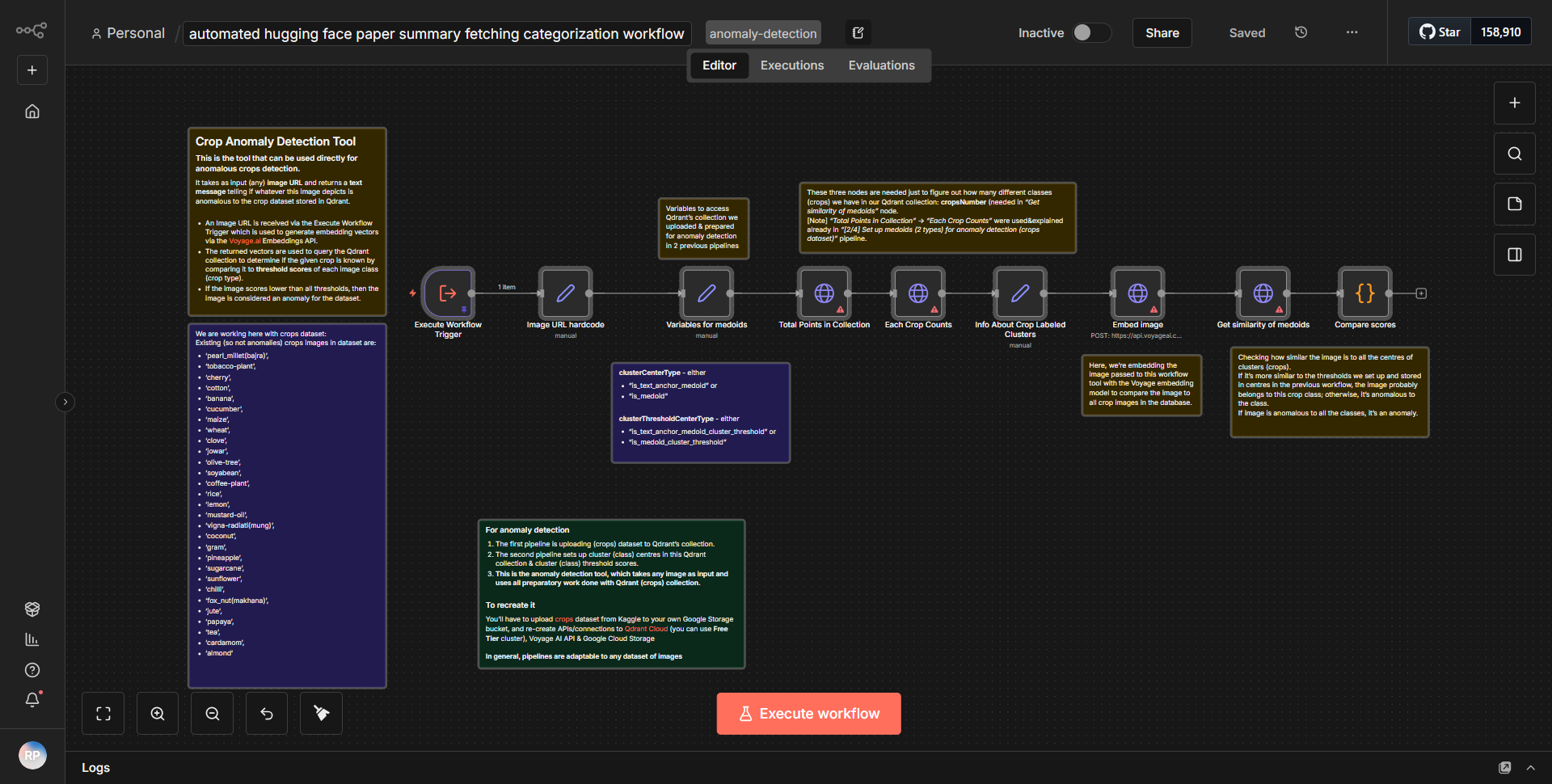
Employs a vector database for large-scale data analysis, concentrating on anomaly detection and KNN classification for artificial intelligence agents.
How it works
The workflow titled "Vector Database Utilization as a Big Data Analytical Resource for AI Agents" is designed to perform large-scale data analysis focusing on anomaly detection and KNN (K-Nearest Neighbors) classification. The workflow begins with a trigger node that initiates the process based on a specified event or schedule.
1. Data Input:
The workflow starts by retrieving data from a vector database. This is accomplished using a node that connects to the database, executing a query to fetch the relevant data points necessary for analysis.
2. Data Preprocessing:
Once the data is retrieved, it undergoes preprocessing. This step may involve cleaning the data, normalizing it, or transforming it into a suitable format for further analysis. Specific nodes are utilized for these tasks, ensuring that the data is ready for anomaly detection and classification.
3. Anomaly Detection:
The next phase involves applying an anomaly detection algorithm. A dedicated node is used to analyze the preprocessed data for any outliers or unusual patterns that deviate from the norm. The results of this analysis are crucial for understanding the data distribution and identifying potential issues.
4. KNN Classification:
Following anomaly detection, the workflow proceeds to classify the data using the KNN algorithm. A separate node is responsible for executing the KNN classification, which involves comparing the data points against a set of labeled examples to determine their classifications based on proximity.
5. Output Generation:
Finally, the results from both the anomaly detection and KNN classification processes are compiled. The workflow may include nodes that format these results and send them to a specified output destination, such as a dashboard, report, or another database for further use.
Key Features
- Scalability:
The workflow is designed to handle large datasets efficiently, making it suitable for big data applications.
- Anomaly Detection:
It incorporates advanced techniques to identify outliers in the data, which is essential for maintaining data integrity and identifying potential fraud or errors.
- KNN Classification:
The use of KNN allows for effective classification of data points based on their similarities, providing insights into data trends and patterns.
- Modular Design:
The workflow is built using modular nodes, allowing for easy modifications and enhancements as new requirements arise.
- Integration with Vector Databases:
By leveraging vector databases, the workflow can perform complex queries and analyses that traditional databases may struggle with.
Tools Integration
The workflow integrates several tools and services through specific n8n nodes:
- Vector Database Node:
This node connects to the vector database to retrieve and manipulate data.
- Data Processing Nodes:
Various nodes are employed for data cleaning and transformation, ensuring the data is in the right format for analysis.
- Anomaly Detection Node:
A specialized node that implements algorithms for detecting anomalies within the dataset.
- KNN Classification Node:
This node executes the KNN algorithm to classify data points based on their proximity to labeled examples.
- Output Nodes:
Nodes that handle the final output, whether sending results to a dashboard, generating reports, or storing them in another database.
API Keys Required
The workflow does not specify any API keys or authentication credentials required for its operation. It is assumed that the necessary access to the vector database is managed through internal configurations or environment settings, rather than through explicit API keys.