![Vector Database: A Big Data Analysis Resource for AI Agents [2/3 - anomaly]](https://res.cloudinary.com/dwid2xvok/image/upload/v1764212700/n8n/screenshots/vector-database-as-a-big-data-analysis-tool-for-ai-agents-23-anomaly.png)
Vector Database: A Big Data Analysis Resource for AI Agents [2/3 - anomaly]
Investigates the application of a vector database in the analysis of large datasets, emphasizing anomaly detection for artificial intelligence agents.
How it works
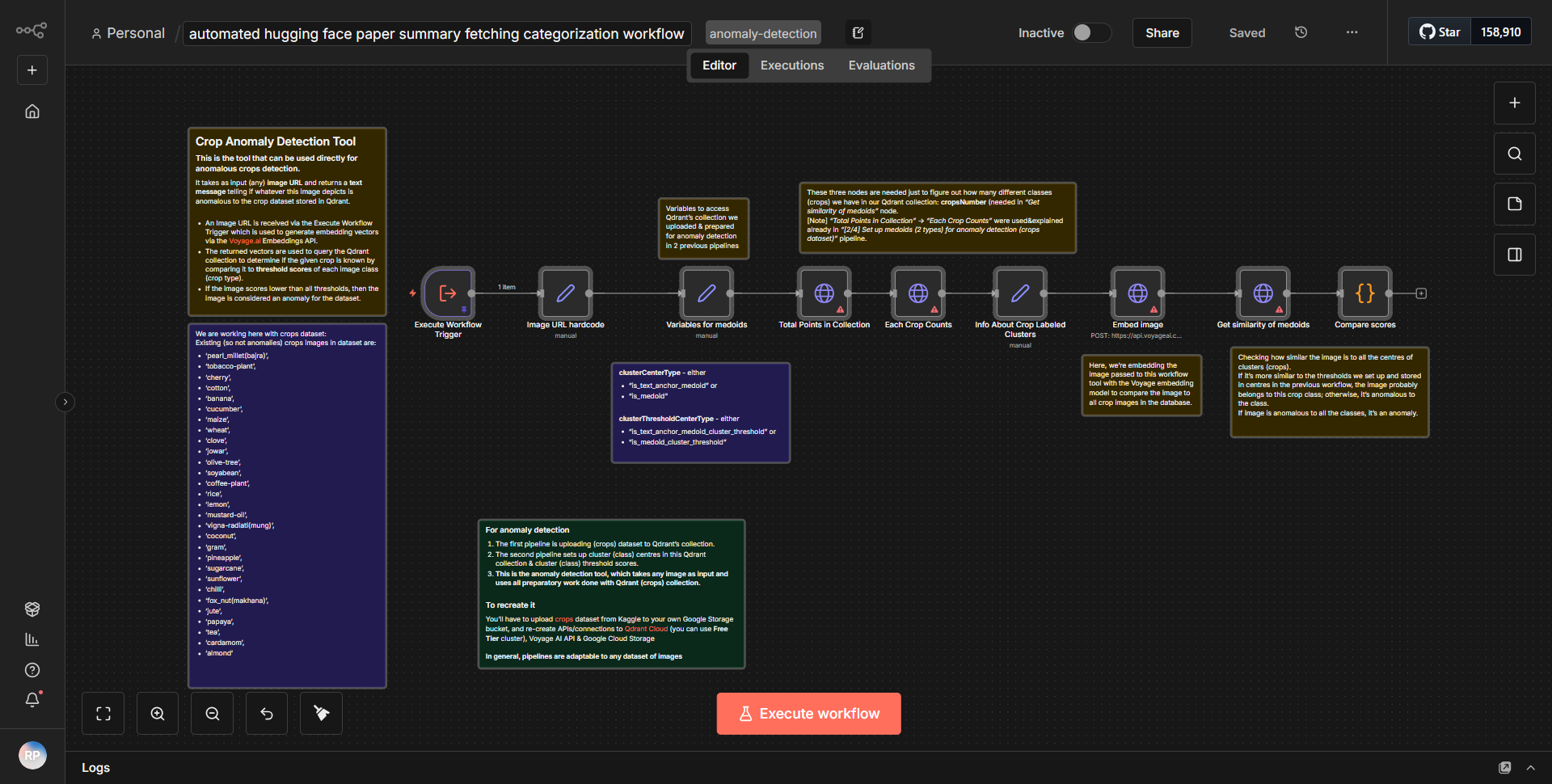
The workflow titled "Vector Database: A Big Data Analysis Resource for AI Agents [2/3 - anomaly]" is designed to facilitate the analysis of large datasets with a focus on anomaly detection. The workflow begins with a trigger node that initiates the process based on a specified schedule. This node is connected to a data retrieval node, which fetches data from a vector database. The data is then processed through a series of transformation nodes that prepare it for analysis.
Next, the workflow includes a filtering node that identifies potential anomalies within the dataset based on predefined criteria. The filtered results are subsequently passed to a notification node, which alerts the user or relevant stakeholders about the detected anomalies. Finally, the workflow concludes with a logging node that records the results of the analysis for future reference. This sequential flow ensures that data is efficiently processed, analyzed, and communicated.
Key Features
This workflow boasts several key features that enhance its utility for AI agents and data analysts:
1. Automated Data Retrieval:
The workflow automatically fetches data from a vector database, reducing the need for manual data entry and ensuring timely access to information.
2. Anomaly Detection:
It incorporates advanced filtering techniques to identify anomalies, which is crucial for maintaining data integrity and making informed decisions.
3. User Notifications:
The integration of a notification system allows stakeholders to be promptly informed about any detected anomalies, facilitating quick responses to potential issues.
4. Comprehensive Logging:
The logging feature ensures that all actions and results are recorded, providing a clear audit trail for analysis and review.
These features make the workflow a powerful tool for organizations looking to leverage big data for AI applications.
Tools Integration
The workflow integrates several tools and services through specific n8n nodes:
1. Cron Node:
Used to schedule the workflow execution.
2. HTTP Request Node:
Utilized for fetching data from the vector database.
3. Function Node:
Processes and transforms the data for anomaly detection.
4. IF Node:
Implements filtering logic to identify anomalies based on set criteria.
5. Email Node:
Sends notifications to users regarding detected anomalies.
6. Write Binary File Node:
Logs the results of the analysis for record-keeping.
These integrations enhance the workflow's capabilities and streamline the data analysis process.
API Keys Required
The workflow does not require any API keys or authentication credentials for its operation. All nodes function based on internal configurations and do not necessitate external API access. This simplifies the setup process and allows for immediate deployment without additional security configurations.