Identify Workplace Discrimination Trends Using AI
Detects trends of discrimination in the workplace through AI-powered evaluation.
How it works
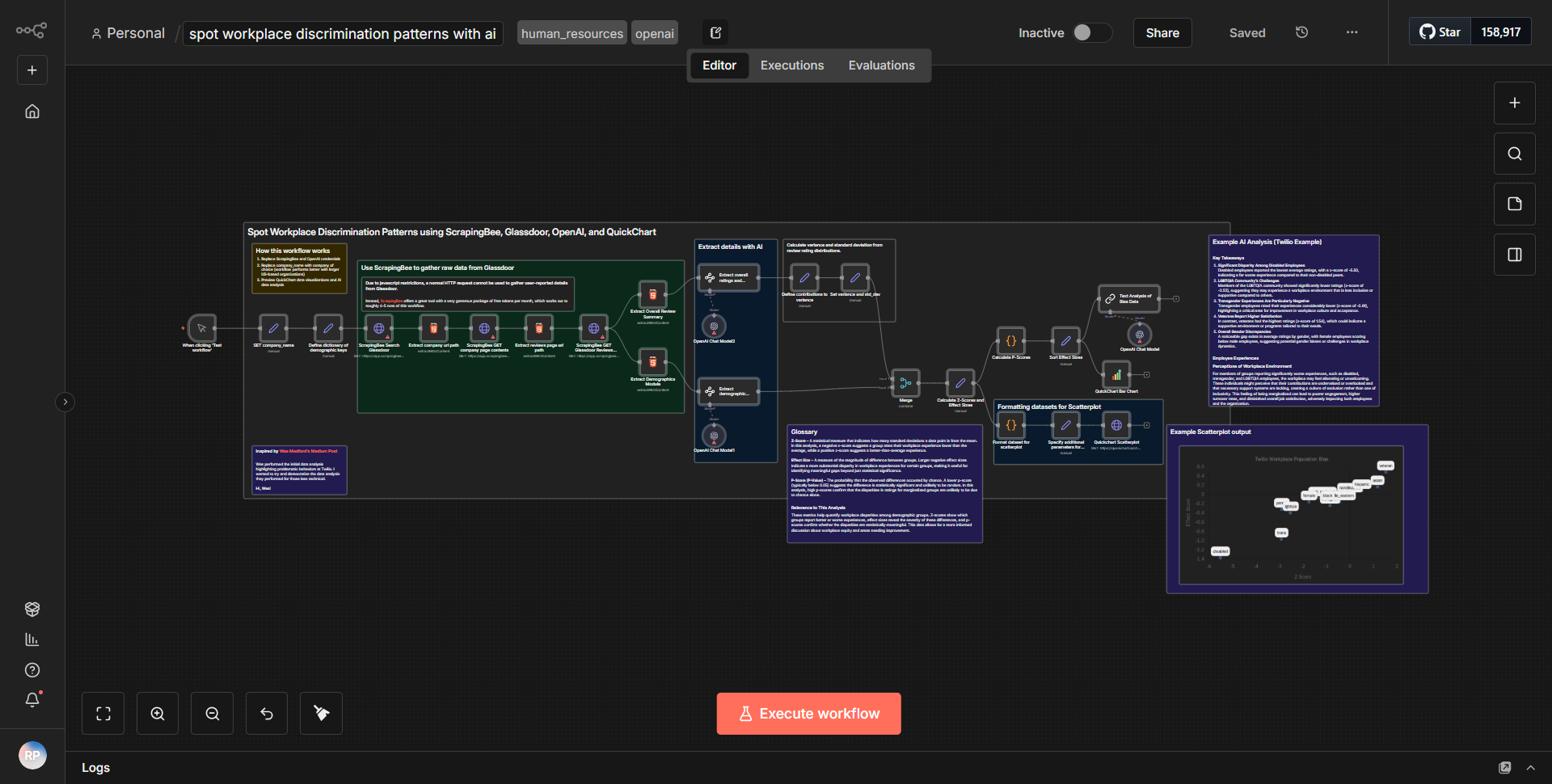
The workflow titled "Identify Workplace Discrimination Trends Using AI" is designed to detect patterns of discrimination in the workplace through an AI-powered evaluation process. The workflow operates in a sequential manner, utilizing various nodes to process data and derive insights.
1. Trigger Node:
The workflow begins with a trigger node that initiates the process based on a specific event or schedule. This node is responsible for starting the workflow and can be configured to run at regular intervals or upon receiving new data.
2. Data Input Node:
Following the trigger, the workflow includes a data input node that collects relevant data regarding workplace incidents, employee feedback, or other pertinent information. This data serves as the foundation for the analysis.
3. Data Processing Node:
The next step involves a data processing node that cleans and prepares the input data. This node may include operations such as filtering out irrelevant information, normalizing data formats, and ensuring that the data is structured appropriately for analysis.
4. AI Analysis Node:
The core of the workflow is the AI analysis node, which applies machine learning algorithms to evaluate the processed data. This node identifies trends and patterns related to workplace discrimination, leveraging pre-trained models or custom algorithms to generate insights.
5. Output Node:
After the analysis is complete, the workflow includes an output node that formats the results for presentation. This may involve generating reports, visualizations, or summaries that highlight key findings and trends.
6. Notification Node:
Finally, the workflow may include a notification node that alerts stakeholders about the findings. This could involve sending emails, messages, or updating dashboards to ensure that the relevant parties are informed of the trends identified.
Throughout this process, data flows seamlessly from one node to the next, with each node performing a specific function that contributes to the overall goal of identifying workplace discrimination trends.
Key Features
- AI-Powered Analysis:
The workflow utilizes advanced machine learning techniques to analyze workplace data, providing insights that are both accurate and actionable.
- Automated Data Processing:
By automating the data cleaning and preparation steps, the workflow reduces manual effort and increases efficiency, allowing for quicker insights.
- Customizable Triggers:
Users can configure the trigger node to run the workflow based on specific events or schedules, ensuring that the analysis is timely and relevant.
- Comprehensive Reporting:
The output node generates detailed reports and visualizations that help stakeholders understand the trends in workplace discrimination, facilitating informed decision-making.
- Real-Time Notifications:
The inclusion of a notification node ensures that relevant parties are promptly informed of any significant findings, enabling swift action when necessary.
Tools Integration
The workflow integrates various tools and services through specific n8n nodes:
- HTTP Request Node:
Used for making API calls to external services, potentially for data retrieval or sending results.
- Function Node:
Employed for custom JavaScript code execution, allowing for tailored data processing and manipulation.
- Set Node:
Utilized to format and structure the data before analysis, ensuring that it meets the requirements of the AI model.
- Email Node:
Facilitates sending notifications and reports to stakeholders, ensuring effective communication of findings.
API Keys Required
The workflow may require API keys for external services, particularly if it involves data retrieval or sending results via APIs. Specific API keys and credentials are not detailed in the provided JSON or screenshot, but users should ensure they have the necessary access to any external services integrated into the workflow. If no external services are used, then no API keys are required.