AI Fitness Trainer Strava Data Evaluation and Customized Training Recommendations
Health coaching through the analysis of Strava data.
How it works
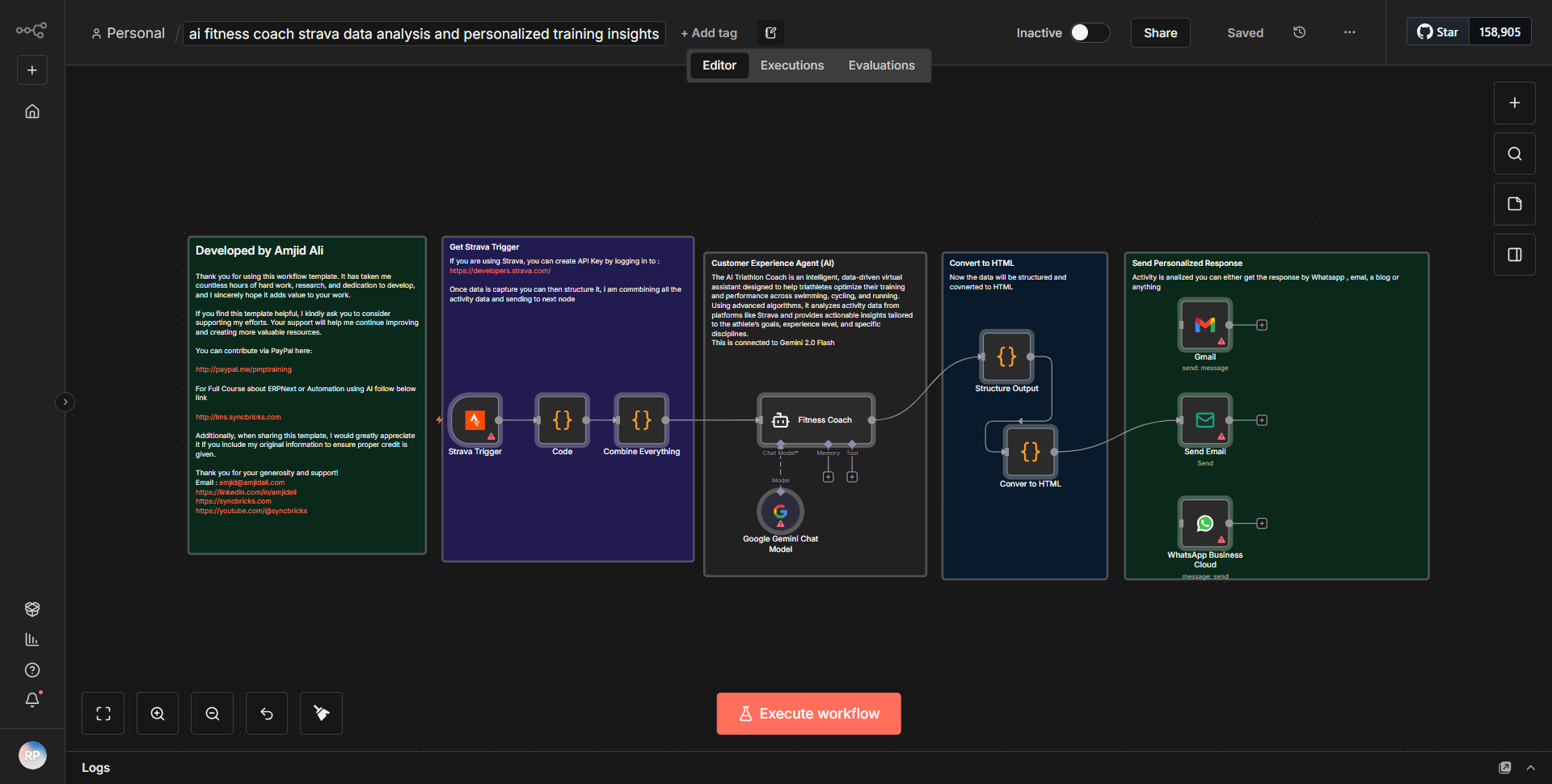
The workflow titled "AI Fitness Trainer Strava Data Evaluation and Customized Training Recommendations" operates by analyzing user data from Strava to provide personalized health coaching. The process begins with a trigger node that activates the workflow based on a specific event, such as new activity data being available from Strava.
1. Strava Node:
The workflow starts with a Strava node that retrieves the user's activity data. This node is configured to connect to the Strava API, requiring user authentication to access their fitness data.
2. Data Processing:
After fetching the activity data, the workflow processes this information using a series of function nodes. These nodes are responsible for parsing the data, calculating metrics such as total distance, average speed, and calories burned, and preparing it for analysis.
3. AI Analysis:
The processed data is then sent to an AI model node, which evaluates the user's performance and provides insights based on the historical data. This step involves machine learning algorithms that analyze trends and patterns in the user's activities.
4. Recommendation Generation:
Following the analysis, the workflow generates customized training recommendations. This is done through another function node that formats the insights into actionable advice tailored to the user's fitness goals.
5. Output Delivery:
Finally, the recommendations are sent to a communication node, which could be an email or messaging service, to deliver the personalized training plan to the user. This ensures that the user receives timely and relevant feedback on their fitness journey.
Key Features
- Personalized Insights:
The workflow provides tailored training recommendations based on individual Strava activity data, making it highly relevant for users seeking specific fitness goals.
- AI-Driven Analysis:
Utilizing machine learning algorithms, the workflow offers deep insights into user performance, identifying strengths and areas for improvement.
- Automated Data Retrieval:
The integration with Strava allows for automatic fetching of user activity data, reducing manual input and ensuring that the analysis is based on the most current information.
- User-Friendly Output:
The recommendations are formatted for easy understanding, enabling users to quickly grasp their training plans and implement them effectively.
- Scalability:
The workflow can be adapted to include additional features or integrate with other fitness platforms, enhancing its functionality over time.
Tools Integration
- Strava API:
Used for retrieving user activity data.
- Function Nodes:
Employed for data processing, calculations, and formatting insights.
- AI Model Node:
Utilized for analyzing performance data and generating recommendations.
- Email/Messaging Node:
For delivering the customized training recommendations to users.
API Keys Required
- Strava API Key:
Required for authenticating and accessing user data from Strava. Users must provide their credentials to enable the workflow to function properly. No additional API keys or authentication methods are mentioned in the workflow configuration.