Interact with PostgreSQL Database
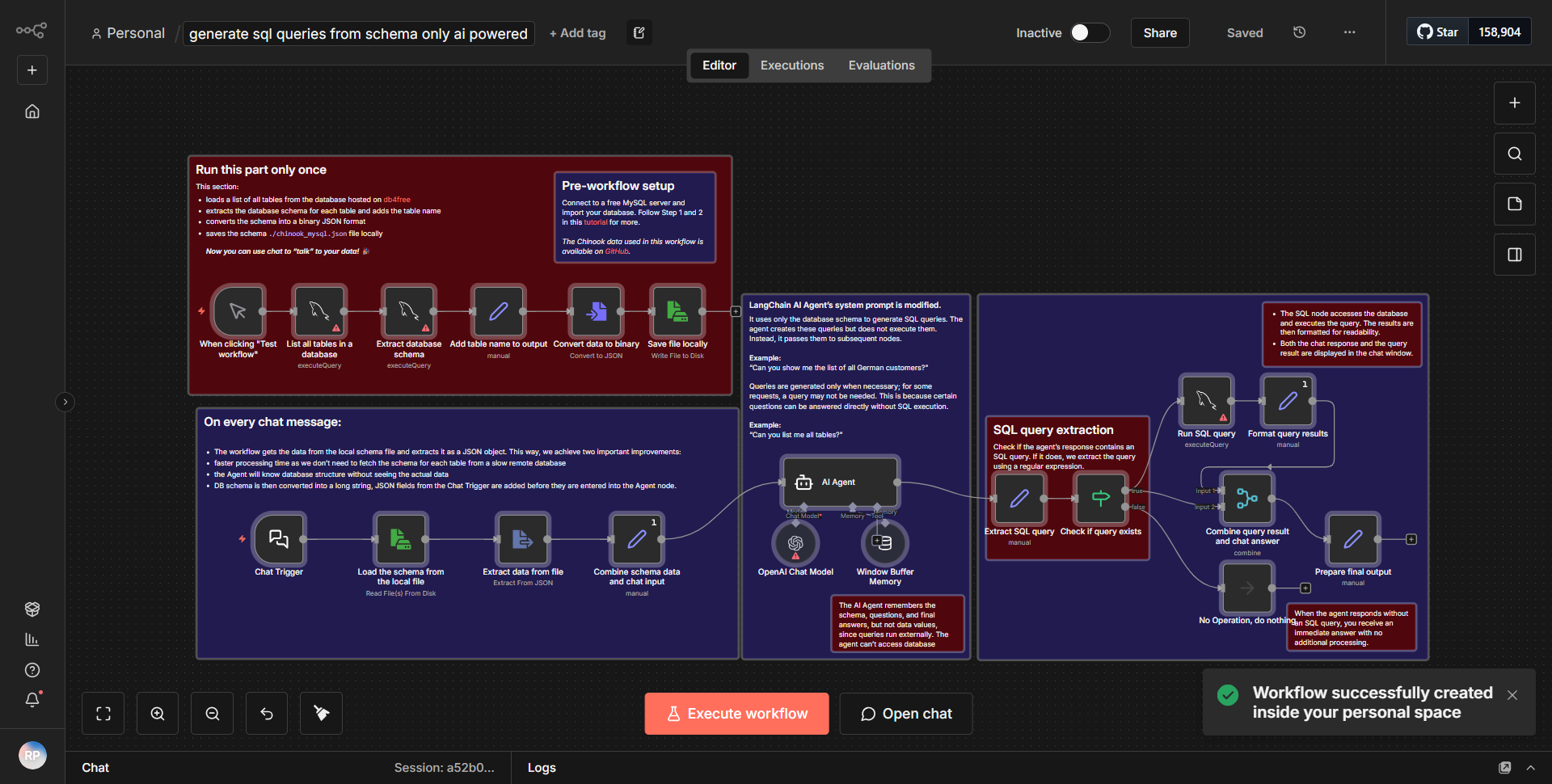
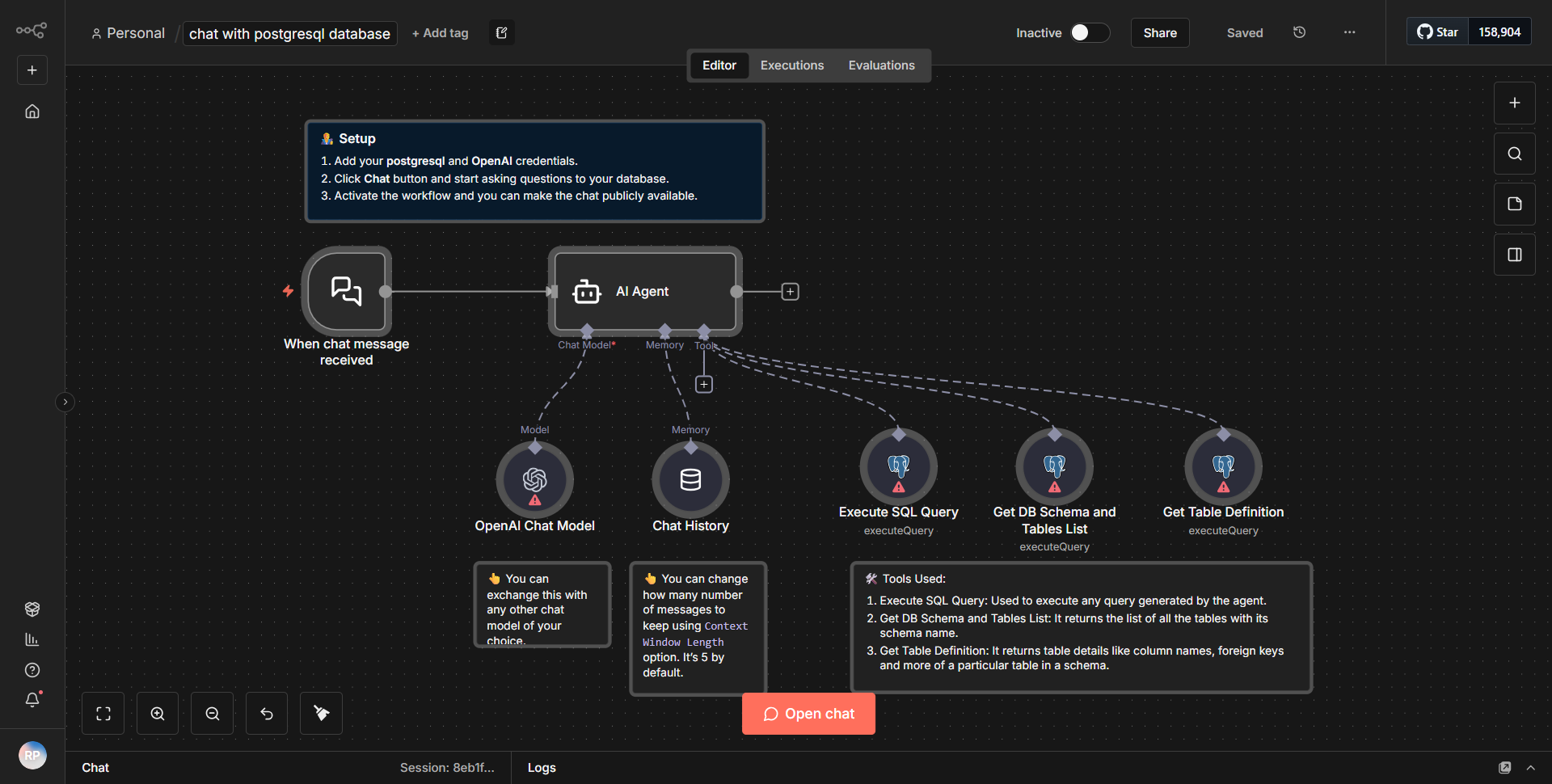
This workflow facilitates interaction between an AI assistant and a PostgreSQL database, enabling users to access and extract information through natural language queries. It accommodates personalized SQL queries and schema exploration.
How it works
The workflow titled "Interact with PostgreSQL Database" is designed to facilitate seamless interaction between an AI assistant and a PostgreSQL database. The flow begins with a trigger node that listens for incoming natural language queries from users. Upon receiving a query, the workflow processes this input to determine the appropriate SQL command to execute.
1. Trigger Node:
The workflow starts with a webhook trigger that captures user queries. This node is essential for initiating the workflow based on incoming HTTP requests.
2. Function Node:
After capturing the query, the data is passed to a Function node. This node is responsible for parsing the natural language input and converting it into a structured SQL query. The logic implemented here is crucial for interpreting user intent and generating the correct SQL syntax.
3. PostgreSQL Node:
Once the SQL query is constructed, it is sent to a PostgreSQL node. This node connects to the specified PostgreSQL database and executes the generated SQL command. The results of the query execution are then retrieved for further processing.
4. Response Node:
Finally, the output from the PostgreSQL node is sent back to the user through a response node. This node formats the results in a user-friendly manner, ensuring that the information is easily understandable.
The entire process allows users to interact with the database using natural language, making data retrieval intuitive and efficient.
Key Features
- Natural Language Processing:
The workflow enables users to input queries in natural language, which are then interpreted and transformed into SQL commands, enhancing user experience.
- Dynamic SQL Query Generation:
The Function node dynamically generates SQL queries based on user input, allowing for personalized and flexible data retrieval.
- Database Interaction:
Direct interaction with a PostgreSQL database allows users to access, manipulate, and explore data seamlessly.
- User-Friendly Responses:
The workflow formats the output in a way that is easy for users to understand, making it accessible even for those without technical expertise.
Tools Integration
- PostgreSQL:
The workflow integrates with a PostgreSQL database through the PostgreSQL node, which handles all database interactions.
- Webhook:
The initial trigger for the workflow is managed by a webhook node, allowing it to receive HTTP requests.
- Function Node:
This node is utilized for processing and transforming user input into SQL queries.
API Keys Required
No API keys or authentication credentials are required for this workflow to function. It operates purely on the connection established with the PostgreSQL database and the webhook trigger for incoming queries.