Angie, AI Personal Assistant for Telegram Voice and Text Communication
AI-powered personal voice and text assistant bot that responds to inquiries, handles tasks, and engages in a natural manner.
How it works
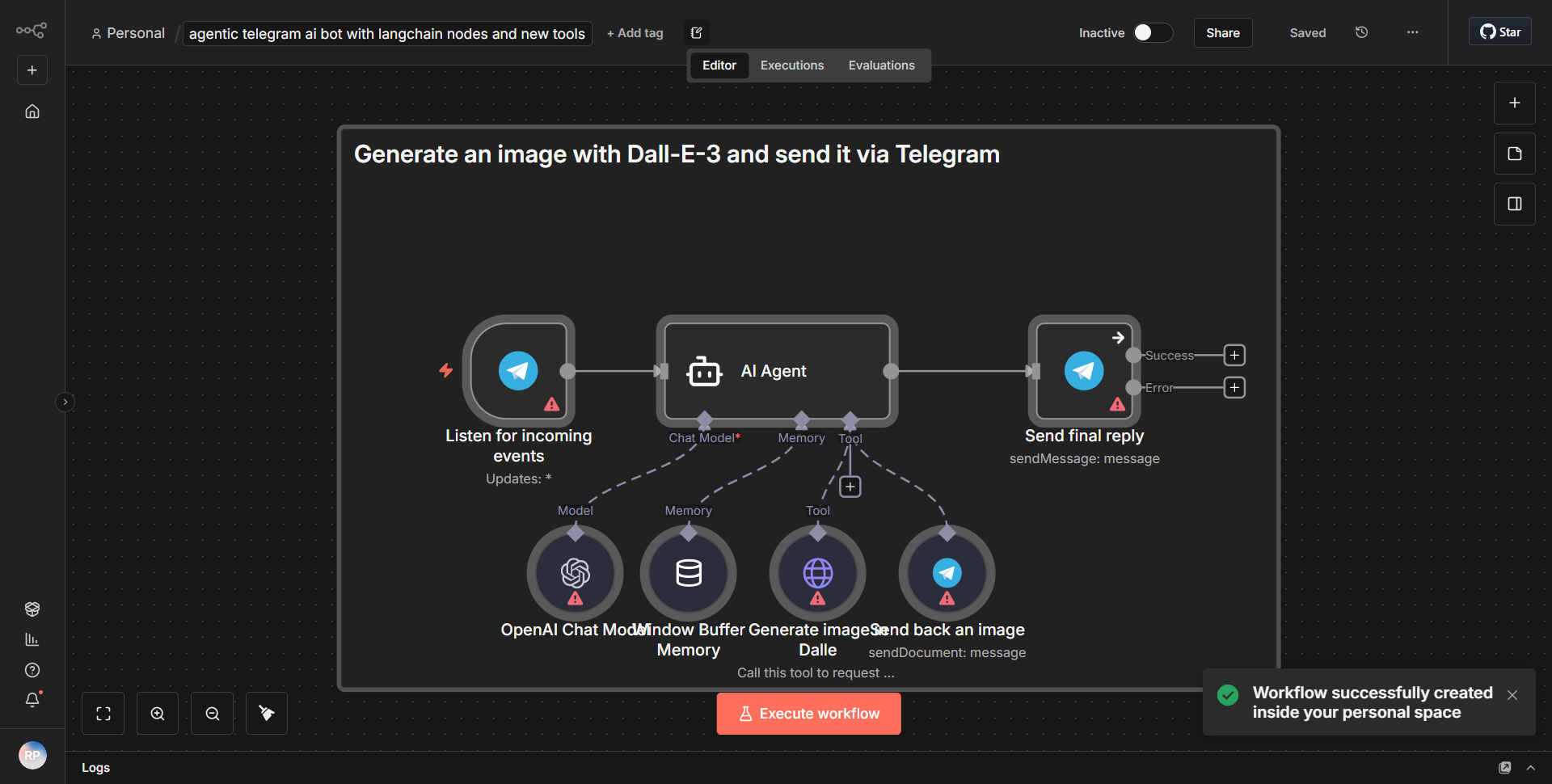
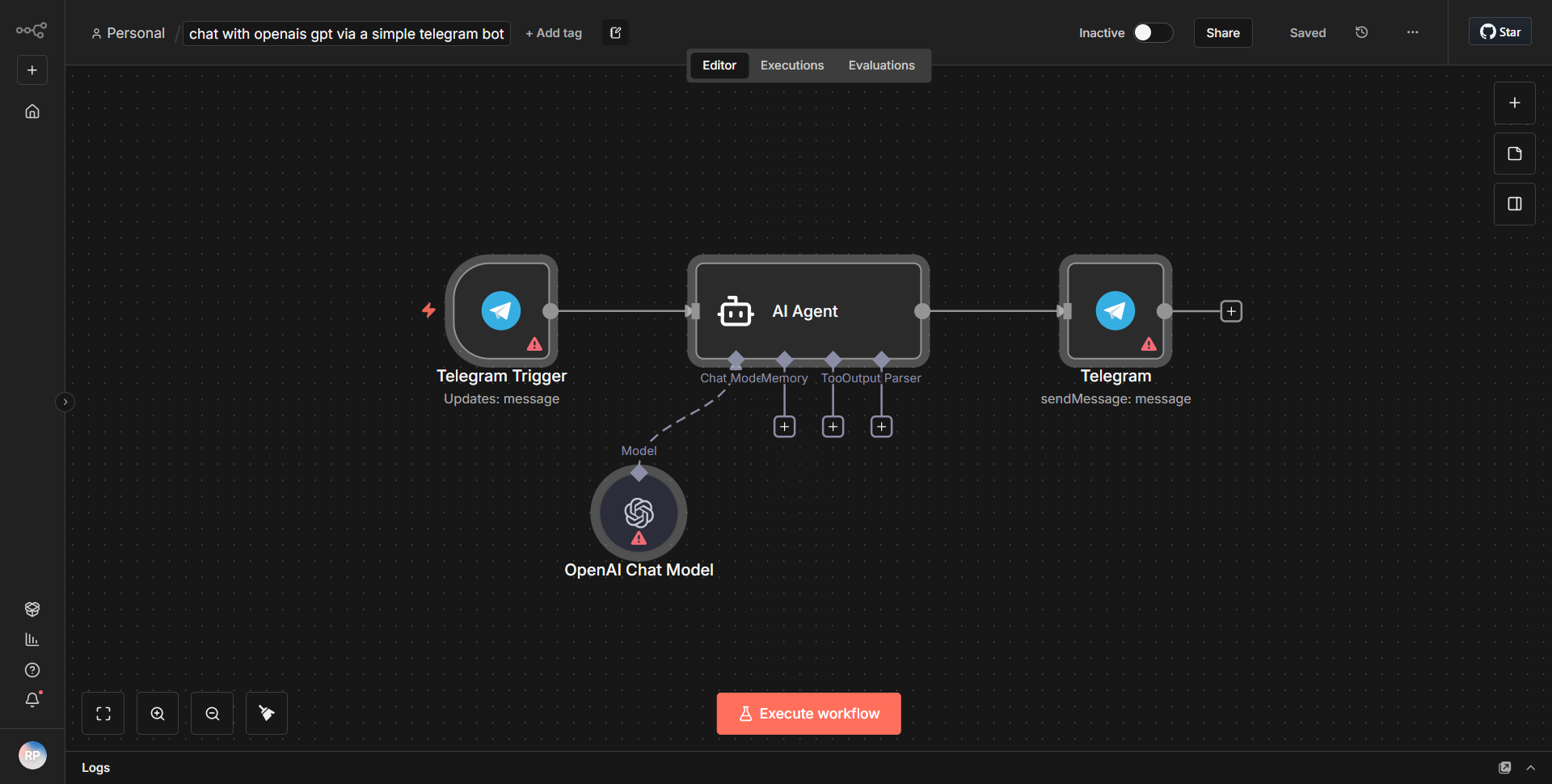
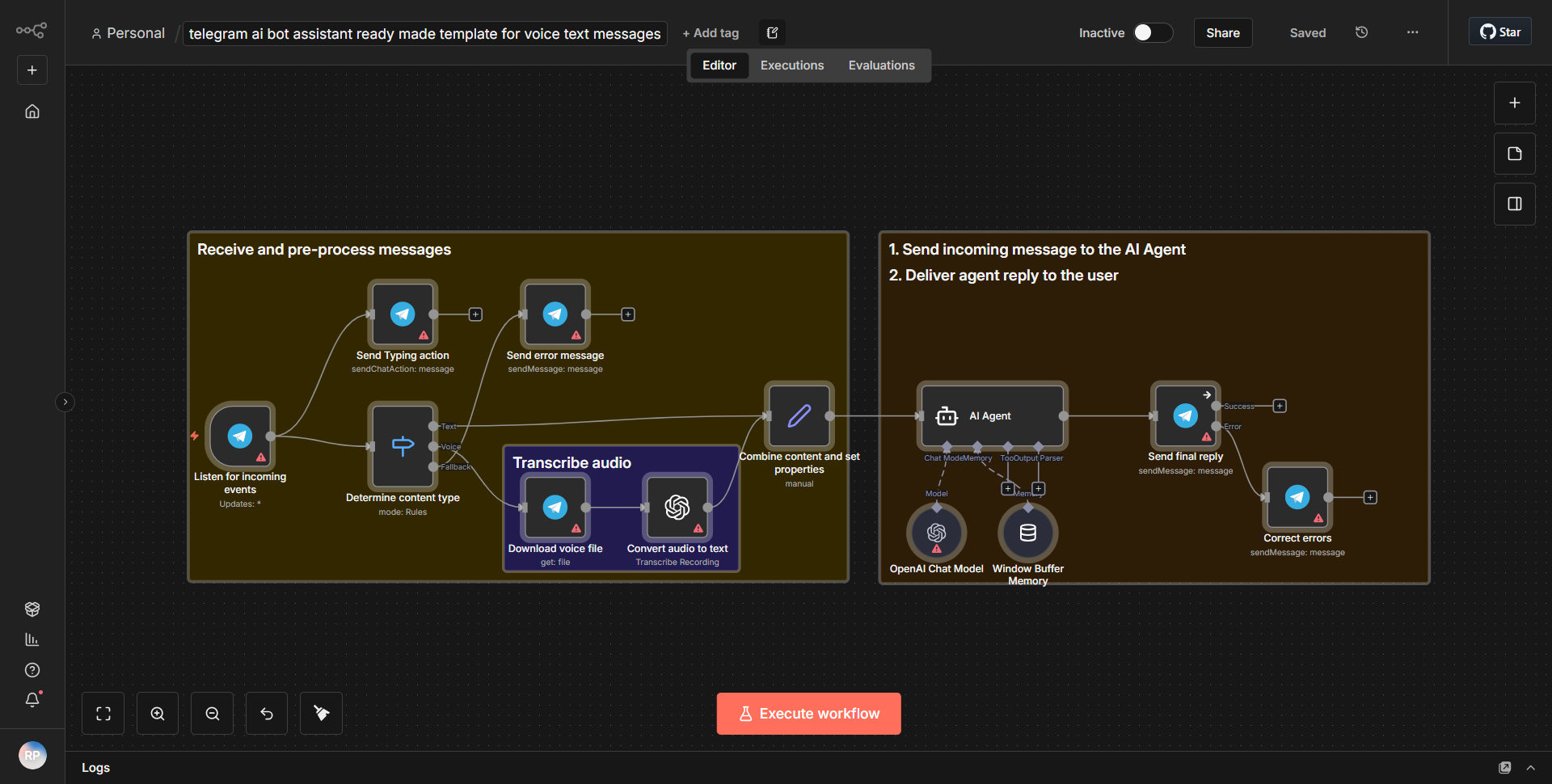
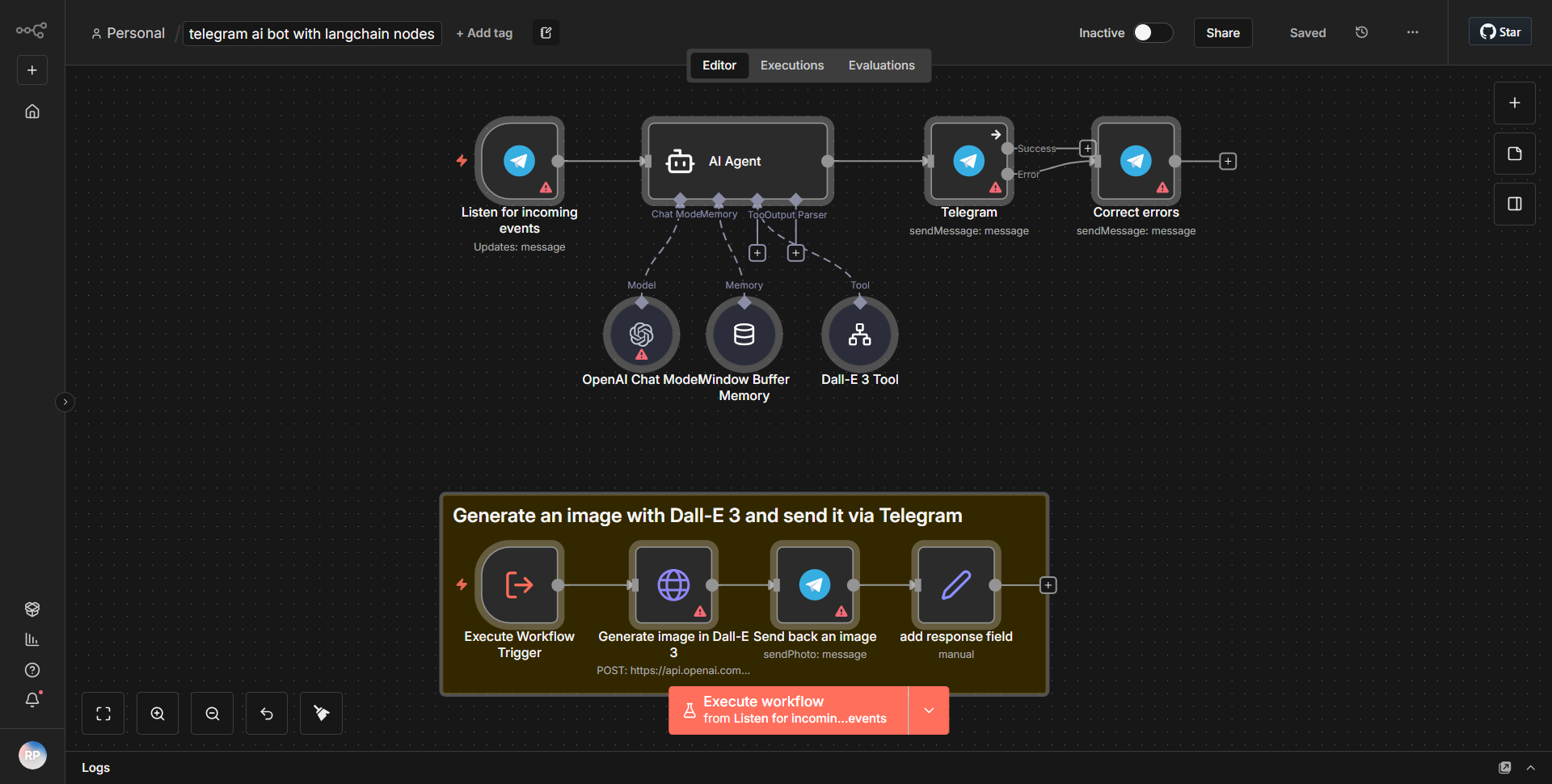
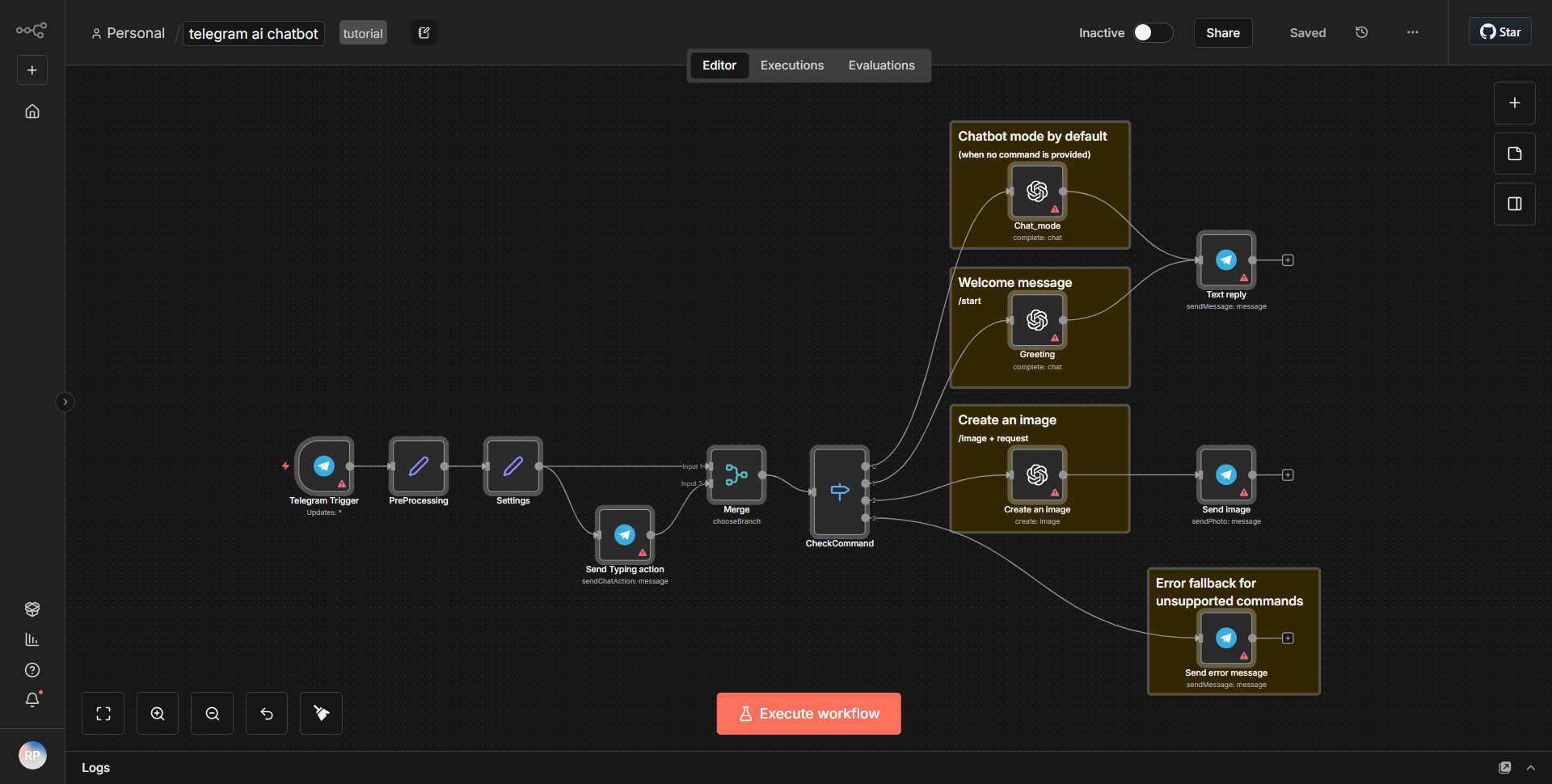
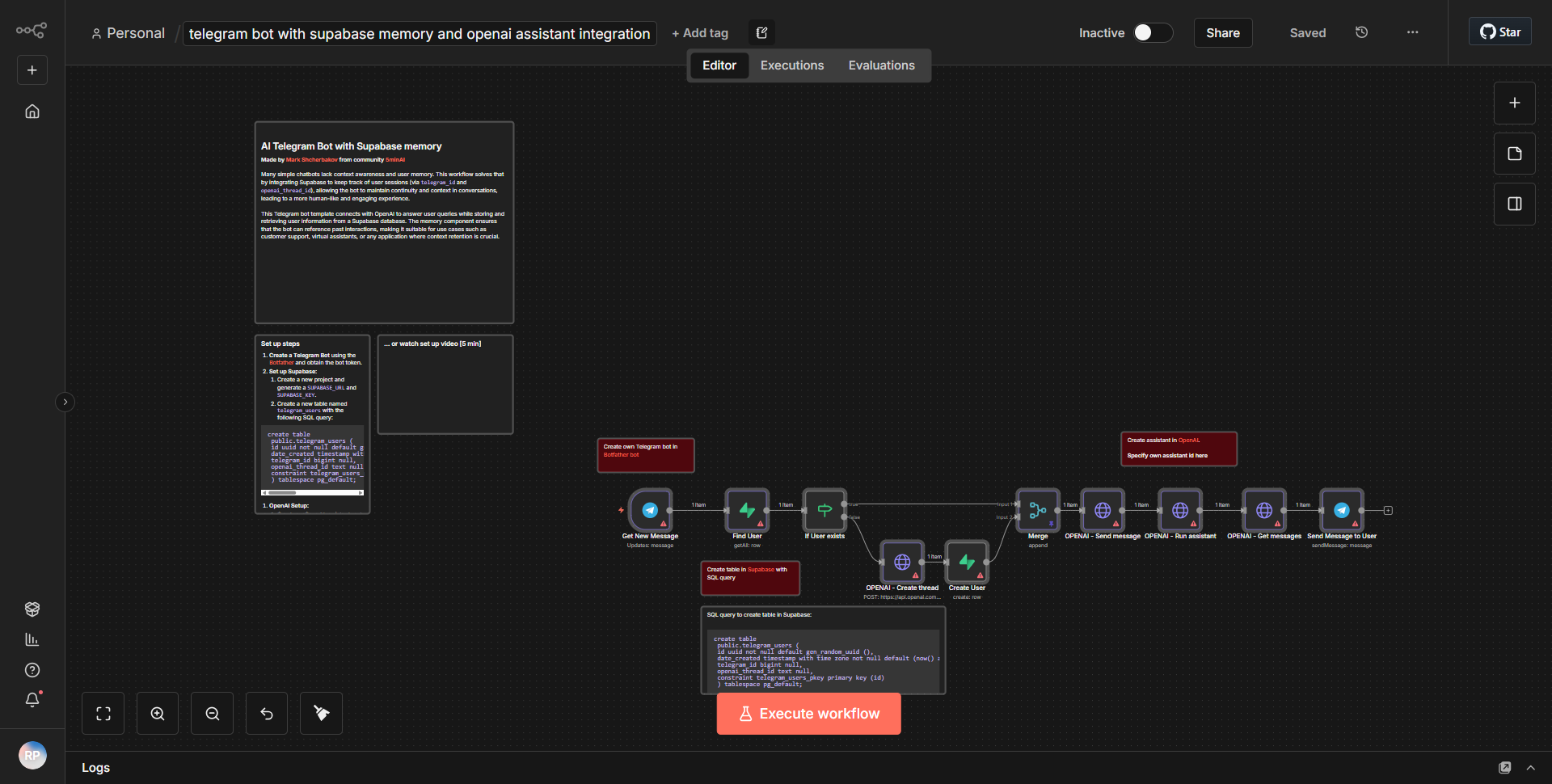
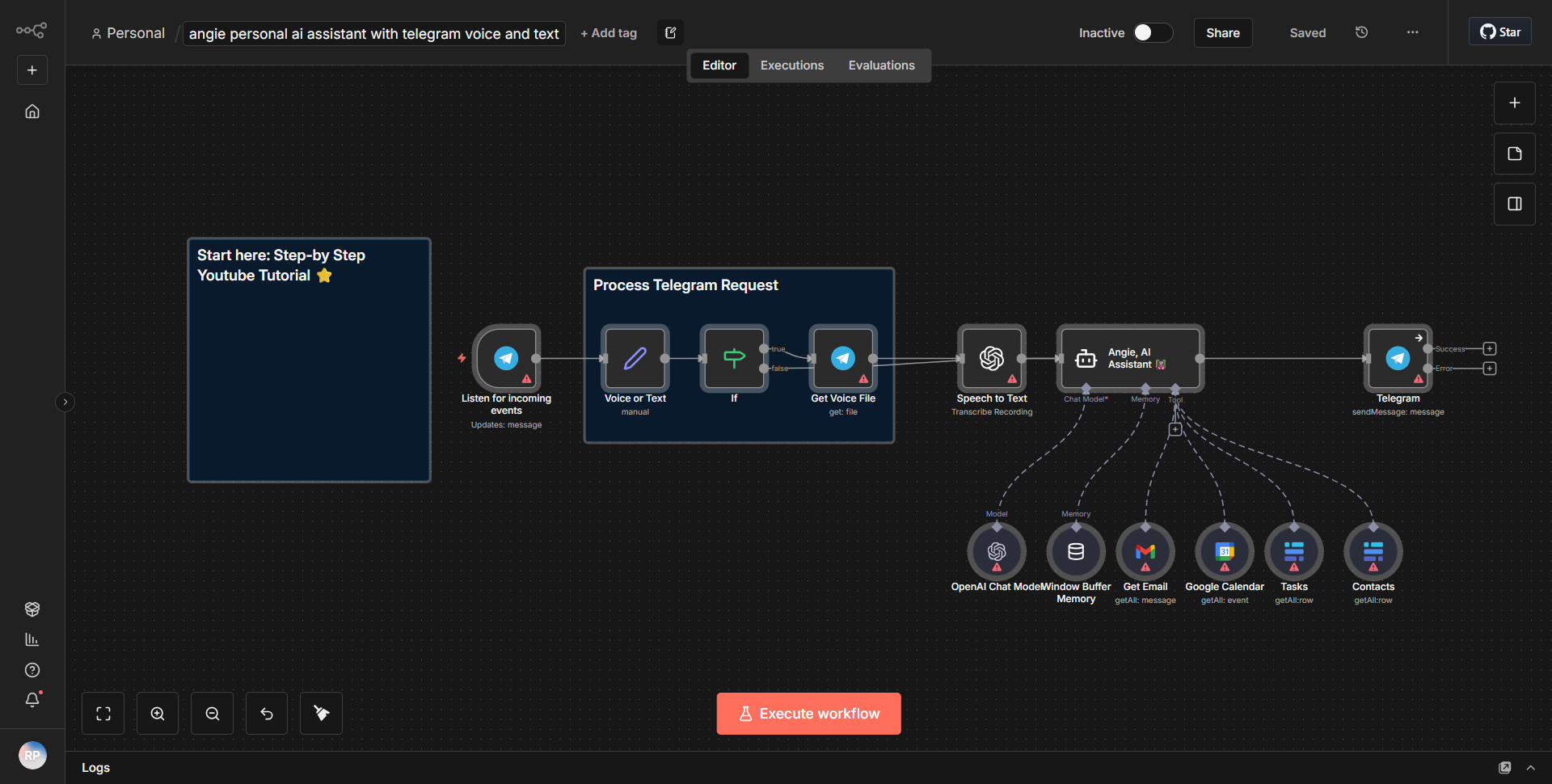
The workflow titled "Angie, AI Personal Assistant for Telegram Voice and Text Communication" operates as a sophisticated bot designed to interact with users on Telegram through both voice and text. The workflow begins with a Trigger node that listens for incoming messages from Telegram. When a user sends a message, this node captures the content and the sender's information.
Following the Trigger node, the workflow utilizes a Function node to process the incoming message. This node is responsible for preparing the data for further processing, such as extracting the text or voice command from the user's input. Depending on the type of message received (text or voice), the workflow branches out to handle each case appropriately.
For text messages, the workflow connects to an AI service node, which processes the text input and generates a response based on the user's inquiry. This AI service could be an integration with a natural language processing (NLP) API that understands and generates human-like responses. The generated response is then sent back to the user through another Telegram node, which handles sending messages.
In the case of voice messages, the workflow includes an additional step where the voice input is first transcribed into text using a speech-to-text service. Once transcribed, the process follows the same path as the text messages, where the AI service generates a response, and the response is sent back to the user via Telegram.
The workflow concludes with a final node that ensures all responses are formatted correctly before being dispatched, allowing for a seamless interaction experience for the user.
Key Features
1. Multi-Modal Interaction:
The workflow supports both text and voice communications, allowing users to interact with the assistant in their preferred mode.
2. AI-Powered Responses:
By integrating an AI service, the bot can provide intelligent and contextually relevant responses to user inquiries.
3. Real-Time Processing:
The workflow is designed to handle incoming messages in real-time, ensuring that users receive prompt replies.
4. Voice Transcription:
The ability to convert voice messages into text allows for a smooth transition between different modes of communication.
5. User Context Awareness:
The workflow can maintain context by recognizing the user’s previous messages, enhancing the conversational experience.
Tools Integration
The workflow integrates several tools and services to function effectively:
- Telegram Trigger Node:
Captures incoming messages from users on Telegram.
- Function Node:
Processes and prepares incoming data for further actions.
- AI Service Node:
Utilizes an external AI API for generating responses based on user input.
- Speech-to-Text Service Node:
Converts voice messages into text for processing.
- Telegram Send Message Node:
Sends responses back to users on Telegram.
API Keys Required
To operate this workflow, the following API keys and credentials are necessary:
- Telegram Bot API Token:
Required to authenticate and interact with the Telegram API.
- AI Service API Key:
Needed to access the AI service for generating responses.
- Speech-to-Text Service API Key:
If a specific speech-to-text service is used, its API key will be required for transcription.
If any of these services do not require API keys, it should be clearly indicated in the workflow configuration.