Cypress Intercept Search
Free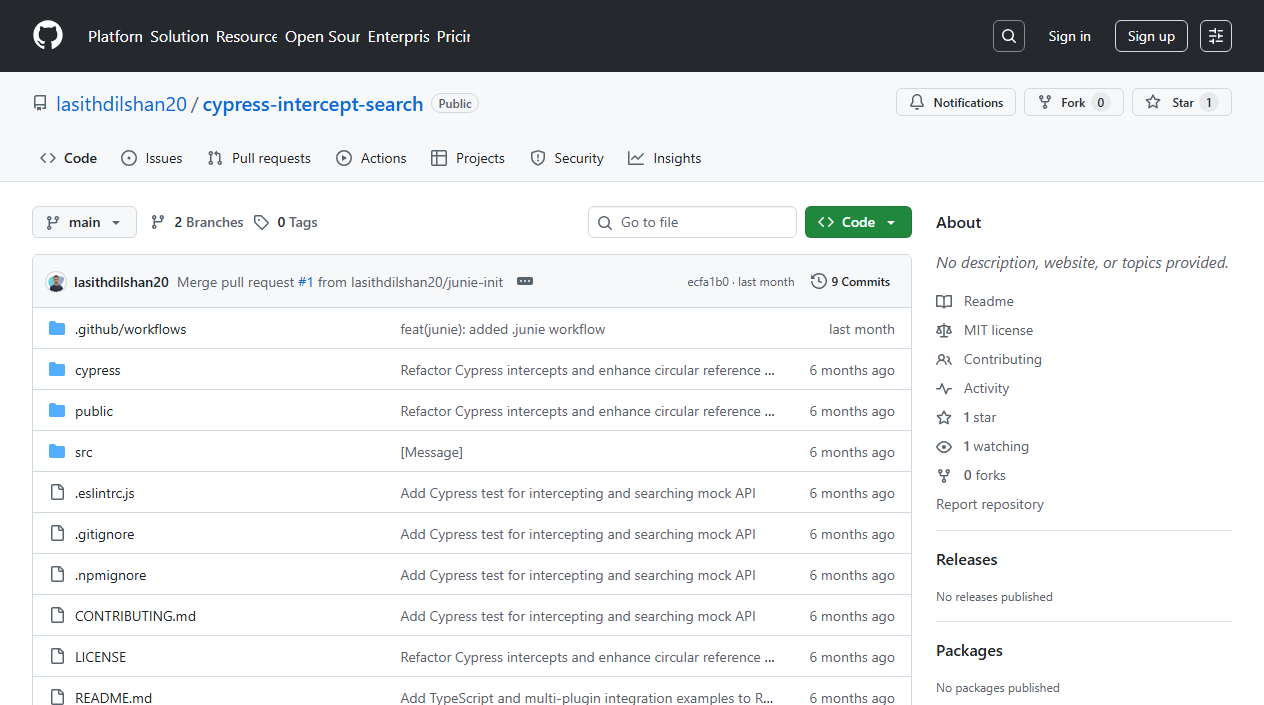
About
Enhance your Cypress end-to-end testing experience with cypress-intercept-search, a lightweight plugin designed to simplify assertions by offering a robust, chainable .search() command that allows for the recursive identification of keys and values within intercepted requests and responses. This tool is particularly suited for intricate JSON payloads and dynamic testing scenarios, integrating effortlessly with Cypress 10+ (as well as earlier versions) via your cypress.config.js/ts or plugin index file to enable concise, maintainable assertions without unnecessary boilerplate. With its built-in search functionality, it minimizes test fragility and speeds up debugging, allowing you to concentrate on test logic rather than complicated nested helpers. Whether you are verifying headers, query parameters, or nested request/response bodies, cypress-intercept-search provides clarity, speed, and robustness for your CI/CD pipelines.
Key Features
- Recursive Traversal:Automatically navigates through every layer of intercepted entities—headers, query parameters, request bodies, and response payloads—to find corresponding keys or specific values.
- Flexible Assertions:Utilize Cypress's integrated .should() and .then() methods to verify presence, tally occurrences, or examine result metadata such as location, path, and fullPath.
Benefits
- Reduced Boilerplate:Say goodbye to custom recursive helpers and repetitive .then() blocks—simply use chain.search() following cy.wait() for clear and expressive tests.
- Improved Readability:Tests resemble natural specifications, emphasizing the "what" to verify instead of the "how" to navigate through objects.
- Enhanced Maintainability:As your API develops, the plugin’s universal search mechanism adjusts automatically, eliminating the need to rewrite custom traversal code.
- Faster Debugging:In-depth match metadata precisely identifies the location of a failure, speeding up the process of root-cause analysis in intricate workflows.